UofMUSCLE.com – M.U.S.C.L.E. Figures from Mattel
Economics 100 – M.U.S.C.L.E. Price Guide
The most common search term and question sent into UofMUSCLE@gmail.com is some version of:
How much are M.U.S.C.L.E.’s worth?
Originally a deliberate decision had been made to shy away from offering a “Price Guide.” Instead a more philosophical approach was taken.
Unfortunately this does not help people looking for basic information about M.U.S.C.L.E. – which is one of the main goals of UofMUSCLE.com. The reality is that standards prices have always been widely known to members of the M.U.S.C.L.E. community. Not making this information known to people unfamiliar with M.U.S.C.L.E. does a disservice to everyone.
For the vast majority of M.U.S.C.L.E. toys the answer is simple – especially for the M.U.S.C.L.E. figures. The price, and perhaps the value, of M.U.S.C.L.E. figures tend to be $0.50 to $0.75 per figure.
For many of the other M.U.S.C.L.E. items the prices have stayed largely consistent since around the year 2000. The two biggest factors that affect the prices are: (1) condition; and (2) enthusiastic buyers. “Enthusiastic buyers” is not a euphemism for the M.U.S.C.L.E. Rule of Two either.
Long-term M.U.S.C.L.E. collectors occasionally witness an individual swoop in with a wiliness to pay any price for any item. Most frequently the individual that swoops in; then swoops back out just as quickly. These types of buyers may create some unnaturally high prices for a short period of time, but M.U.S.C.L.E. items always tend to recess to their historical price.
Overall general guidelines for many of the prominent M.U.S.C.L.E. items would probably be:
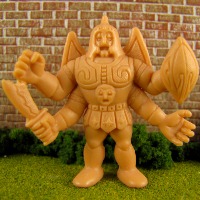
Satan Cross
Data would suggest around $25 is a fair price. Satan Cross still routinely gets valued at around $50 when he is a part of a larger auction. However, with just a little patience, a Satan Cross can be had for $25 or less.
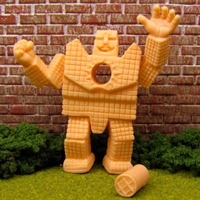
Non-Poster Figures
The Alpha figures appear so infrequently that it is nearly impossible to suggest a price. The price of an Alpha figure is always set by the MRT.
The Beta figures are more likely to be in the $300 to $500 range – occasional outlier prices are the result of the MRT.
The Gamma figures consist of wrestling ring figures, board game figures, and Satan Cross. More information on these can be found throughout the price guide.
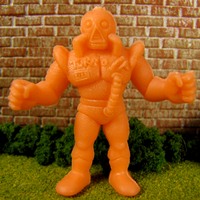
Class A figures
The price of Class A figures is most often driven by Master Set collectors’ needs (and ultimately the MRT). Most Class A figures are worth $20 or less. The most attractive and most popular Class A figures may be able to command a maximum price around $100 – but that is a small number of the Class A figures.
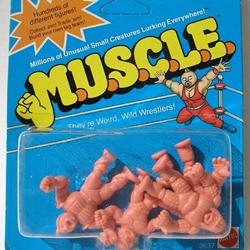
4-Pack
An average 4-pack is good condition will probably sell for around $15.
None of the 4-packs are considered “rare,” except for the French/Canadian version. The only difference being that the card is written in French and English.
Open, or partially opened, 4-packs are worthless.
10-Pack
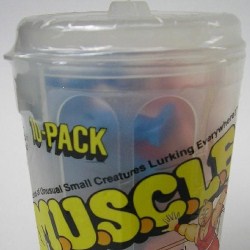
A sealed Flesh 10-pack will probably sell for around $50 to $75. The 50/50 and Color versions will generally have a lower average price than the Flesh version.
Open 10-packs might be worth, at most, a few dollars.
28-Pack
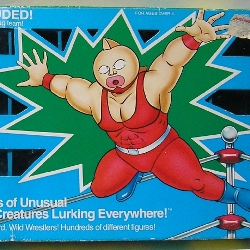
The 28-packs are quite fragile, so condition can greatly influence the final price. The only legitimate “variation” that collectors may pay a premium for is a sealed 28-pack. However, the last time sealed 28-packs came up for auction they sold for approximately $30 per 28-pack.
Hard Knockin’ Rockin’ Ring Wrestling Arena
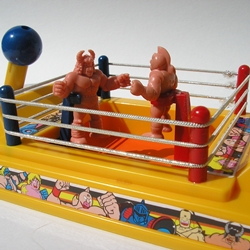
The figures routinely show up in large Flesh lots and have never earned a premium price tag – no matter how hard some sellers attempt to attach it. They are priced like normal Flesh figures.
$20 for a complete ring, both figures, in fair condition is normal. Many sellers vastly overvalue their boxes and rings. In very, very good condition the price could rise closer to $50. A mint, unopened box would likely yield to the MRT.

M.U.S.C.L.E. Battlin’ Belt
Condition is a critical component with this item. Loose, complete, and in mint condition a loose belt will tends to sell for about $10. However, packaged and still sealed will command a much higher price. A solid cardboard box, sealed, in good condition, will probably sell for around $50. The window box will sell for more.
M.U.S.C.L.E. Mega-Match Game (Board Game)
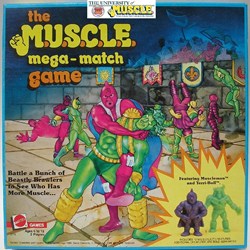
The second question, has the sticker sheet been used? If the game is complete with an unused sticker sheet, then the price might be around $50. However, the board game doesn’t inspire much passion in M.U.S.C.L.E. collectors so the buying audience for a “premium” game is less than many items.
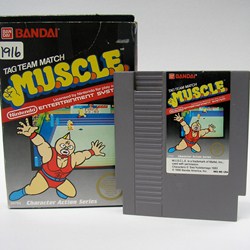
Tag Team Match M.U.S.C.L.E. (Video Game)
The price can change significantly if the game is complete with its box. In this situation the condition of the box will weigh heavily into the final price. If it is mint, complete, and sealed, the price goes even higher and is likely to attract the attention of hardcore NES collectors.

Posters
Condition is absolutely critical for the posters. A perfectly mint poster would easily sell for over $100 or more.
It’s a nice bonus if the original poster tube is present, but it doesn’t automatically add a significantly higher value. (But don’t mail it in the original poster tube.) Because the original tube isn’t great for display most collectors don’t care about it.
These prices are not meant to serve as an absolute price. Many, many factors can influence the final price of any public auction or private sale. The goal is simply to provide basic prices that have always been widely known to members of the M.U.S.C.L.E. community. Not making this information known to people unfamiliar with M.U.S.C.L.E. does a disservice to everyone.


What is a M.U.S.C.L.E. Figure?
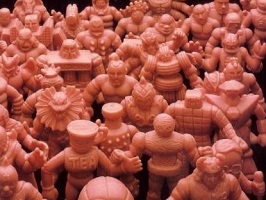
M.U.S.C.L.E. Figure Guide
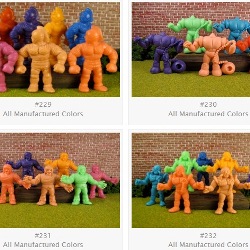 The University of M.U.S.C.L.E. Figure Guide features a complete visual archive of every poster figure, including classifications.
  Breaking News
- Top Ten Thursday #6 April 29, 2021
- M.U.S.C.L.E. Figure #49 April 28, 2021
- Monday Morning M.U.S.C.L.E. Musings #147 April 26, 2021
- Stir Up Saturday – Timely April 24, 2021
- Epilogue – Week of April 18th April 23, 2021
#1 by Johnny on June 3, 2014 - 12:28 pm
Excellent!
#2 by The Orgg on June 3, 2014 - 1:23 pm
Feel free to use this.
The Mega Match board game ha five unique figures that were a light purple or grape color. The grape figures typically are about two dollars themself. The board game, without the figures, sells for three to five dollars. A complete game with stickers, figures and spinner can reach fifteen, and a still shrinkwrapped game can go as high as twenty. For more details, check boardgamegeek.com.
I hope this is still accurate. When I stopped actively participating, it was. Possibly a mite high on board only auctions, but three is reasonable.
#3 by Chad Perry on June 6, 2014 - 9:53 am
Thanks guys!
And I will steal some of your write-up. 😉
#4 by Juan M. on June 13, 2014 - 11:10 pm
I would say the board game would be more in the $25-40 range. This is what I have seen them go for, but as always it all comes down to who wants it more at that particular time.
#5 by mike newman on May 25, 2016 - 7:39 pm
I recently bought the game along with 50 figures.. i figured there were 5 green and 5 purple ones…I paid $100 with the spinner and the stickers were used on the game itself….haven’t seen another for cheaper.
#6 by Chad Perry on July 12, 2016 - 4:56 pm
One time I saw a worm inside of an apple. Now I assume all apples have worms inside of them.
I wonder if that’s the best way to approach something like that?
#7 by Dave on November 13, 2016 - 3:44 pm
I picked up some Muscle Men at a yard sale and can’t find several of them on line. Any recommendations on catelogs the show each one-by-one and rarety? Thanks
#8 by Chad Perry on November 14, 2016 - 10:41 am
I would suggest the UofM M.U.S.C.L.E. Figure Guide.
#9 by Jason Shade on June 25, 2018 - 12:36 pm
I found a box in my attic that has 254 of the figures in it..19 lightblue 19green 18red 37hotpink 19dark orange 19orange 19 purple37dark blue 67 flesh.. I have no clue what they are worth and would like info on them so i could possible have an auction or something.. I have pics upon request.. Hoping to hear from you. Thanks
#10 by Chad Perry on June 25, 2018 - 1:00 pm
I would suggest reading the post above. I would also suggest the UofM M.U.S.C.L.E. Figure Guide.
Then I would take clear pictures and start my eBay auction at $0.99. If you have anything good (99.9% of people don’t), then M.U.S.C.L.E. collectors will flock to your auction.
As I said in the most recent SUS, M.U.S.C.L.E. listings fall into three eBay categories: (1) the members of the AOTW club; (2) good auctions; and (3) largely irrelevant auctions. If you take my advice, then you’ll end up in the second group. If you don’t, then you’ll be wasting your time and energy and end up in the other two groups.
#11 by Dave on November 7, 2018 - 9:36 am
Hi wondering if anyone could give me a value on a complete poster collection of m.u.s.c.l.e. ? I’ve been trying for a while then fine out the value of a complete collection.. thx
#12 by Chad Perry on November 7, 2018 - 4:14 pm
From above:
#13 by Chad T. on August 21, 2023 - 5:14 pm
I have a zip lock gallon bag full of them. I live in Charlotte NC, do you know anyone around here that can look at them?
#14 by Foxman on September 15, 2023 - 8:32 am
Looks like this page was published around 2014? As I post this, it’s almost 2024. A LOT has changed since then. I remember paying $30 for a minty Satan Cross to complete my fleshy set around then. Good luck finding one of those for less than $100.